

Why Digital Clip Watches Are The Ultimate Adventure Hack
- isilvano3
- Dec 19, 2025
- 5 min read
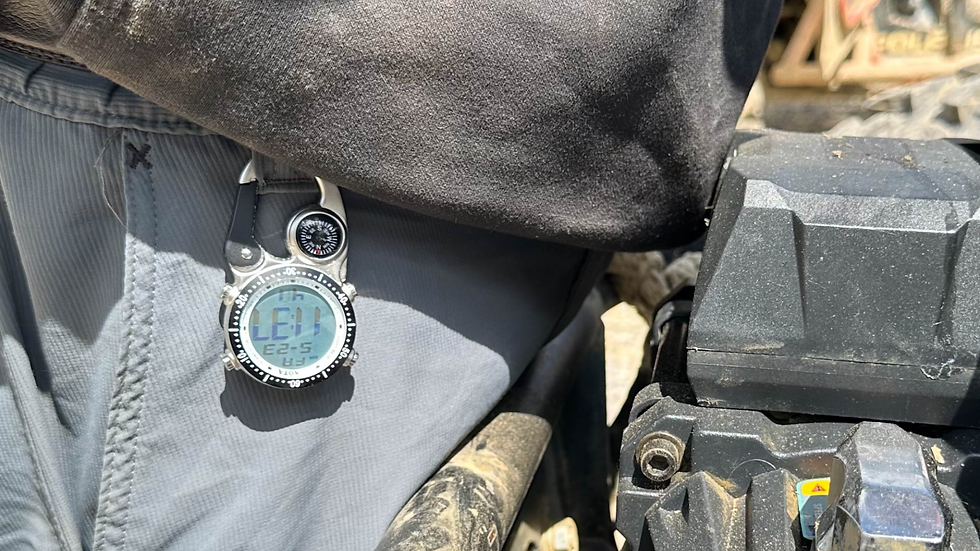
You’re halfway up a rock face, fingers chalked, muscles straining. You reach for the next hold, but your wristwatch jams against the rock, scraping the screen and restricting your wrist movement. Or perhaps you’re three days into a winter trek, burying your wrist under five layers of thermal gear, making checking the time a frustrating archaeological dig every few hours.
For decades, the wristwatch has been the default standard for timekeeping. We strap them on without a second thought, assuming they are the most convenient option. But for outdoor enthusiasts, hikers, climbers, and manual laborers, the wrist isn't always the prime real estate for a timepiece.
The digital clip watch replaces the wristwatch as a better tool for adventurers. It solves real problems for hikers and climbers by moving timekeeping from your wrist to your gear, maximizing comfort and accessibility outdoors.
The Limitations of the Wrist
To understand the appeal of the clip watch, we must first examine where traditional watches fall short. The wrist is a high-movement area. It bends, twists, and often acts as a pivot point for physical labor or climbing. Placing a fragile, expensive piece of glass and metal there is inherently risky during intense activity.
Smartwatches have compounded this issue. While they offer GPS and health tracking, they often suffer from poor battery life and fragility. A single bad scrape against granite can shatter a screen. Furthermore, the "sweat trap" of a silicone or leather band during a humid hike is a sensation every adventurer knows and dreads.
Digital clip watches solve these ergonomic nightmares by removing the device from your body entirely. They hang freely, accessible when you need them and out of the way when you don't.
Unmatched Versatility for Gear Junkies
The primary selling point of a digital clip watch is its ability to live anywhere. The integrated carabiner style allows users to snap the timekeeper onto a backpack strap, a belt loop, a climbing harness, or even the zipper of a tent.
This versatility changes how you interact with time. When you are hiking, having the time visible on your chest strap means you don't have to break your stride or adjust your trekking poles to check your pace. For photographers, clipping the watch to a camera bag keeps your wrists free for manipulating lenses and tripods without snagging.
It also creates a modular system. You can move the watch from your day pack to your hiking shorts in seconds. There is no resizing of straps or fumbling with buckles; just a satisfying click, and you are ready to go.
Rugged Durability and Reliability
Outdoor gear needs to take a beating. If you are worried about scratching your watch, you aren't focused on the trail. Digital clip watches are generally designed with a "function-first" philosophy. They often feature recessed screens protected by thick, rubberized casings or stainless steel bumpers.
Because they aren't trying to be slim enough to slide under a dress shirt, these devices can afford to be bulkier and tougher. They are built to swing against a backpack, hit the ground, or get dragged through brush.
Battery Life That Actually Lasts
One of the biggest anxieties of the modern outdoor experience is battery management. Between phones, GPS devices, headlamps, and cameras, we are constantly managing a power budget.
Most digital clip watches run on standard watch batteries rather than rechargeable lithium-ion cells, which are essential for high-powered smartwatches. This means you aren't measuring battery life in hours or days, but in years. You can head out on a month-long expedition without packing a charging cable for your timekeeper. In survival situations or extended backcountry trips, this reliability is non-negotiable.
Specialized Use Cases: Who Needs This?
While anyone can use a clip watch, certain activities benefit immensely from this form factor.
Rock Climbers and Bouldering Enthusiasts Wrist mobility is crucial when climbing. A watch can restrict movement or get caught in cracks (a dangerous scenario known as a "degloving" risk). Clipping a watch to a harness keeps the wrists completely free for crimps and jams while keeping time easily accessible.
Winter Sports Checking a wristwatch while wearing ski gloves and a heavy parka is nearly impossible. A digital clip watch attached to the outside of a jacket or ski pants zipper pull makes timekeeping effortless in freezing conditions.
Medical and Trade Professionals Outside of recreation, nurses, doctors, and EMTs have long favored fob watches to maintain sterile hands and avoid scratching patients. Similarly, mechanics and construction workers use them to prevent machinery from snagging on a wrist strap.
Features to Look For
If you are ready to ditch the wrist strap, not all clips are created equal. Here is what to prioritize when shopping for one:
Carabiner Quality: The clip mechanism is the most critical component. Look for a spring-loaded gate that feels stiff and secure. You don't want the watch unclipping itself when you jump over a log.
Water Resistance: At a minimum, look for splash resistance. However, if you are kayaking or hiking in torrential rain, aim for a rating of 50 meters or higher.
Integrated Tools: Many digital clips embrace the "Swiss Army Knife" approach. You can find models with built-in compasses, barometers, LED flashlights, and bottle openers.
Display Readability: Since the watch won't be right in front of your face, a high-contrast display with a strong backlight is essential for quick glances in low light.
Clip In and Step Out
The digital clip watch stands out as the straightforward answer to outdoor timekeeping challenges. It delivers durability, accessibility, and real reliability—core needs for anyone prioritizing adventure and practicality over trends.
By moving the time off your wrist, you free yourself up to move more naturally, layer your clothing more effectively, and focus on the environment around you. It’s a small change to your loadout that makes a massive difference in how you experience the outdoors.
Frequently Asked Questions
Are digital clip watches secure enough for running?
Generally, yes. However, a heavy metal watch swinging from a loose belt loop might be annoying due to the momentum. For runners, clipping it to a secure, non-moving part of a hydration vest or backpack strap is usually the best approach to minimize bounce.
Do these watches track steps or heart rate?
Most standard digital clip watches are "dumb" watches—they tell time, date, and maybe temperature. However, the market is shifting, and there are now "smart fobs" or accessories that allow you to convert an Apple Watch or Fitbit into a clip-on device, retaining the tracking features (minus heart rate, which requires skin contact).
Can I use a regular watch as a clip watch?
Yes, conversion kits exist. These are usually silicone or nylon straps with a carabiner attached that replace the standard wristband of your existing watch face. This is a great middle-ground if you love your current watch interface but want the freedom of a clip.


Comments